
Can Stem Cell Therapy Help Restore Heart Health? Before Thinking About Cellular-Level Treatment, Understand “Capillaries” First
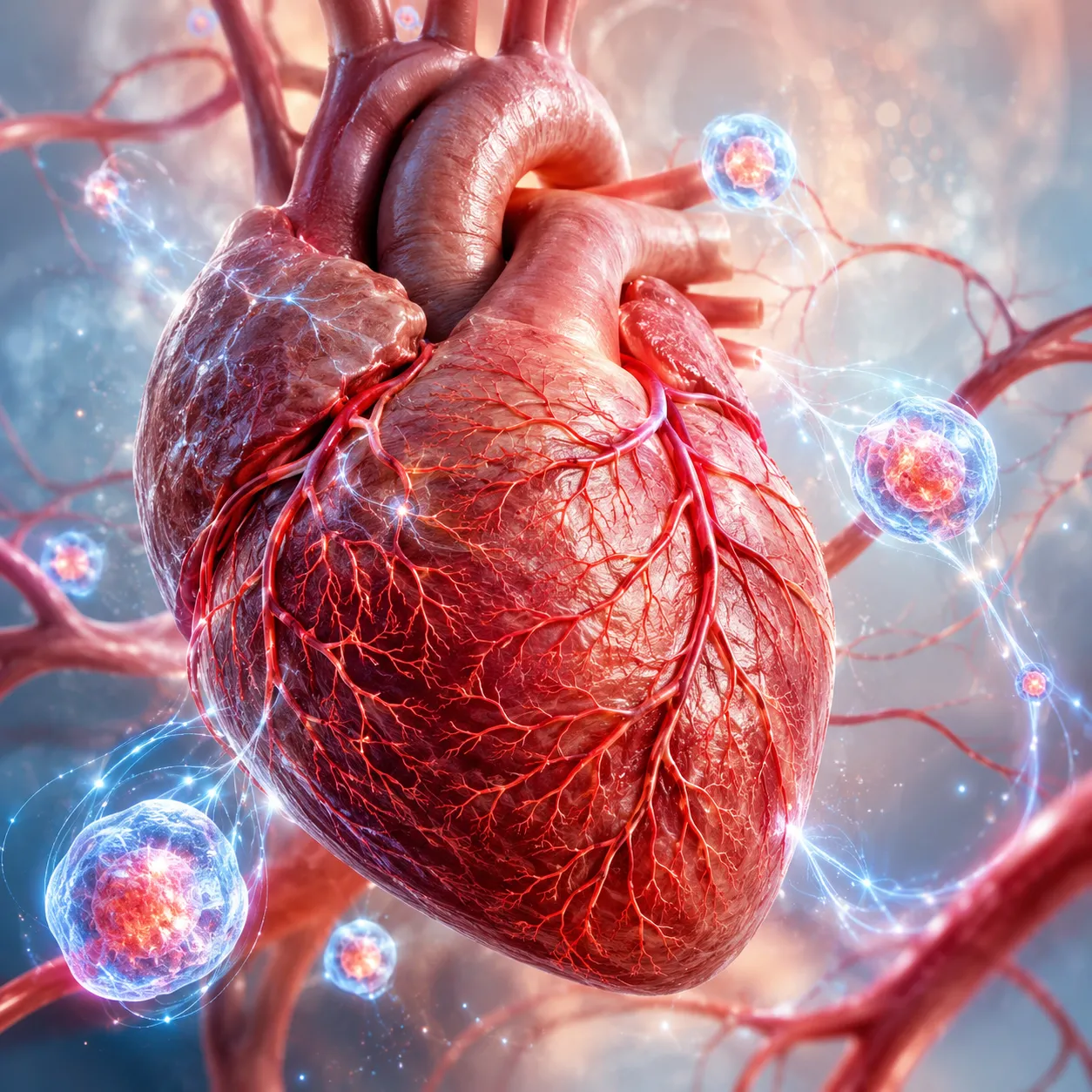
Many people are becoming interested in stem cell therapy for heart restoration because they do not want to wait until the day they need balloon angioplasty, bypass surgery, or another hospital admission. This is especially true for people with a history of heart disease, those who have had a stent placed, undergone balloon angioplasty or heart surgery, or those who are beginning to notice warning signs such as fatigue, chest tightness, palpitations, low energy, or shortness of breath when walking. The question many people begin to ask is: “Is there a way to restore my heart health before it becomes severe enough to require another procedure?” The answer is that modern heart rehabilitation should not look only at whether the “major arteries are blocked.” It should look deeper into the entire vascular system, especially the capillaries, because capillaries are where blood, oxygen, and nutrients are actually delivered to heart muscle cells. This is why the concepts of Stem Cell Therapy, Regenerative Medicine, Microvascular Health, and Advanced Capillary Care are becoming increasingly important topics among people concerned about heart disease. Many people think of heart disease in only two stages: “nothing is wrong yet” or “an artery is blocked and balloon angioplasty is needed.” In reality, the heart may begin to decline long before that point. Some people do not yet have severe blockage in the major arteries, but they begin to experience fatigue, chest tightness during exertion, poor sleep, low energy, or a sense that their body no longer recovers the way it used to. One reason doctors around the world are paying more attention to this is the problem of small blood vessels and microvascular dysfunction, which may be associated with chest pain or reduced blood supply to the heart muscle, even when severe blockage of the major arteries is not found. (European Society of Cardiology) To put it simply, major arteries are like main roads, while capillaries are like small lanes that deliver blood to each individual house. Even if the main road is still open, if the small lanes are damaged, narrowed, stiff, or have poor circulation, the cells at the destination may still not receive enough blood and oxygen. The heart does not only need “open major arteries.” It needs a circulatory system that can deliver blood all the way to the cellular level. The concept of stem cell therapy in heart disease is not simply about “creating a new heart,” as many people may imagine. What is more interesting is that stem cells may be involved in signaling repair processes, reducing inflammation, and supporting a healthier environment for heart tissue and blood vessels. Research in heart failure, such as the DREAM-HF study reported by the American Heart Association, has shown interesting signals in certain groups of patients, especially in relation to some cardiovascular events. However, this does not mean that stem cell therapy can replace all standard medical treatments. (American Heart Association) Therefore, the better question is not: “Can stem cells cure heart disease?” But rather: “How much potential does my heart, vascular system, and capillary network still have for recovery?” Before discussing cellular-level restoration, we first need to understand where the circulation is impaired. Is the heart muscle weakened? Is the vascular lining damaged? Is there hidden inflammation? Are the capillaries still functioning well enough? If major arteries are the highways, capillaries are the final destination that blood must reach. Capillaries play a vital role because they are the point where oxygen and nutrients are delivered from the blood into the cells. When the capillaries function well, the heart muscle has a better chance of receiving oxygen and nutrients efficiently. But when this system declines, even if the major arteries are not completely blocked, the body may begin to signal that “the heart is getting tired.” This is why Longa Heart places strong emphasis on Heart, Vascular & Microvascular / Capillary Care. We do not focus only on treating the heart when the disease becomes severe. We focus on assessment, restoration, and long-term circulatory care through a personalized approach under the concept: “Assess Deeply. Restore Precisely. Care Continuously.” Because stem cell therapy or cellular-level restoration should not be chosen based on hope alone. It should begin with real data from your body. At Longa Heart, assessment can look at multiple dimensions, including the heart’s electrical activity, heart structure, heart performance during exertion, vascular flexibility, endothelial function, hidden inflammation, and capillary health. Relevant assessments may include: EKG, ECHO, EST, Microvascular Health, Vascular Index, FMD, VO2 MAX, and hs-CRP. These tests help answer five important questions: Once these answers are clear, the physician can plan more accurately. Instead of guessing what should be done, we can identify what needs to be restored first.Can Stem Cell Therapy Help Restore Heart Health? Before Thinking About Cellular-Level Treatment, Understand “Capillaries” First
Heart Disease Does Not Always Begin When an Artery Becomes Blocked. It Often Begins When Blood Flow to the Heart Is No Longer Good Enough.
How Is Stem Cell Therapy Related to Heart Restoration?
Capillaries: The Smallest Vessels That May Hold a Big Answer for Heart Restoration
Why Should People Interested in Stem Cell Therapy Start with Vascular and Capillary Assessment First?
This article is for people who are beginning to ask themselves: “Is my heart still functioning as well as it should?” Especially those in the following groups: Longa Heart is designed to offer a private, efficient, and more personalized heart care experience than a large hospital. It is especially suitable for executives, business owners, high-income individuals, and those who value time, privacy, and doctor-led care. The most important starting point is not the name of the treatment. It is understanding the body deeply enough. If you are interested in stem cell therapy or cellular-level restoration, the first step should not be to rush into treatment. The first step should be a thorough evaluation by a cardiologist to understand the current condition of your heart, vascular system, and capillaries. This is the difference between Personalized Heart & Vascular Medicine. It is not a one-size-fits-all program, but a personalized care plan guided by a specialized cardiologist. Many people see a doctor only when their heart sends a loud warning signal. But in reality, heart disease often gives quiet signals long before that. These signs should not be ignored. They may be the beginning of an opportunity to take care of your heart before it becomes too late. If you are interested in stem cell therapy for heart restoration, do not begin with the question: “Can I do stem cell therapy?” Begin with the more important question: “How much potential do my heart, blood vessels, and capillaries still have for restoration?” At Longa Heart Health Medical Center, we help you assess deeply, restore precisely, and care continuously through a personalized approach led by a cardiologist with over 40 years of experience, in a private setting in the heart of Bangkok. For those who have undergone balloon angioplasty, heart surgery, or stent placement, or those experiencing fatigue, chest tightness, palpitations, or looking for a non-surgical approach to heart and vascular restoration. Because good heart health is not only about major arteries not being blocked. It is about blood being able to circulate efficiently all the way to the capillaries and cells. Stem cell therapy is being studied in relation to heart disease, especially in the areas of tissue restoration, inflammation reduction, and vascular support. However, suitability depends on each individual’s condition. A detailed assessment of the heart, blood vessels, and capillaries should come first. Capillaries are the final point where blood, oxygen, and nutrients are delivered to heart muscle cells. If capillaries are damaged or circulation is poor, the heart may not receive blood efficiently, even if the major arteries are not severely blocked. It may be worth considering. Balloon angioplasty or stent placement helps address certain problems in the major arteries, but long-term heart restoration also involves overall vascular health, endothelial function, inflammation, and the capillary system. You should begin with a deeper risk assessment, such as EKG, ECHO, EST, Vascular Index, FMD, Microvascular Health, and relevant blood tests. This allows the physician to design a personalized heart and vascular restoration plan. Longa Heart focuses on doctor-led heart and vascular care by a specialized cardiologist. Our approach includes assessment, restoration, and continuous personalized care, with a strong focus on Microvascular & Capillary Care and a private healthcare experience in the heart of Bangkok.Who Is This For?
How Does Longa Heart View Stem Cell Therapy and Heart Restoration?
Before Waiting for Another Surgery, Consider a Deeper Assessment Today
Start with a Heart & Vascular Assessment
FAQ
Can Stem Cell Therapy Help Restore Heart Health?
How Are Capillaries Related to Heart Disease?
Should People Who Have Had Balloon Angioplasty or Stent Placement Check Their Capillaries?
If I Do Not Want Heart Surgery, Where Should I Start?
How Is Longa Heart Different?